Key Takeaways
A memorable lakeside break begins with matching the setting to your pace, companions, and budget. Compare the shoreline, rooms, activities, policies, and recent guest feedback before you commit.
- Decide whether the trip centers on rest, outdoor adventure, or family time.
- Check the actual distance to the water, nearby attractions, and transport options.
- Compare room layouts, views, dining, recreation, and accessibility features.
- Calculate resort fees, meals, activities, deposits, and cancellation costs.
- Use recent reviews and a direct call to confirm the details that matter most.
Define your ideal lakeside getaway
The right lakes resort hotel is less about having the longest amenity list and more about fitting the kind of days you want to have. A quiet couple’s retreat needs a different atmosphere from a busy family holiday or an activity-led weekend with friends. Start by imagining a typical morning, afternoon, and evening, then use that picture to guide the search.
Choosing between relaxation, adventure, and family activities
Some travelers want a balcony, a good book, and an unhurried breakfast. Others will be disappointed without boat access, trails, or organized recreation, while families may value easy swimming and flexible mealtimes above all else. Write down the two or three experiences you would genuinely miss; those priorities are more useful than a generic promise of “something for everyone.”
A resort with extensive activities can feel lively rather than peaceful, and a secluded property may require more planning for every outing. Decide whether you want entertainment close at hand or a calm base from which to explore.
Deciding how close you want to be to the water
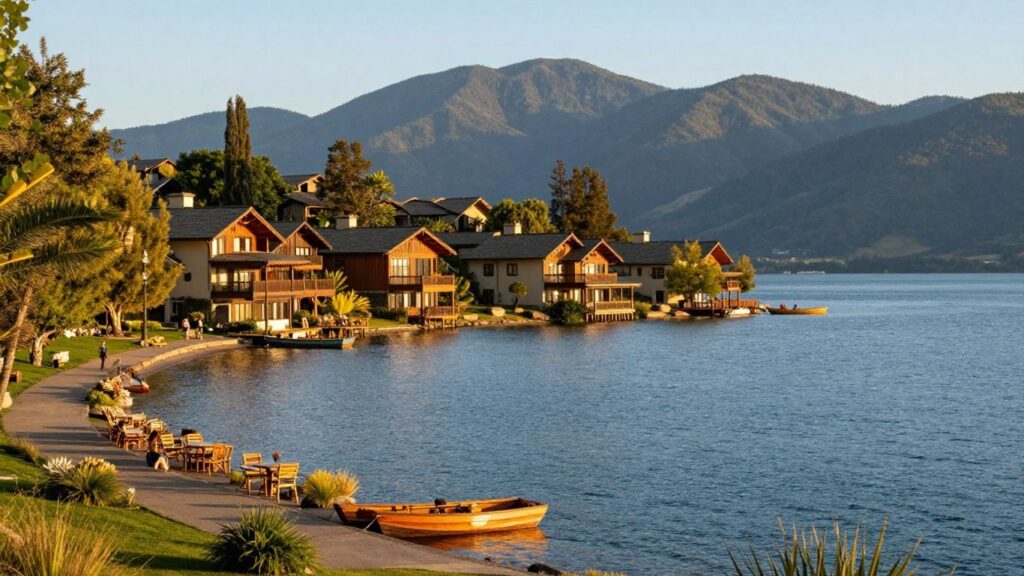
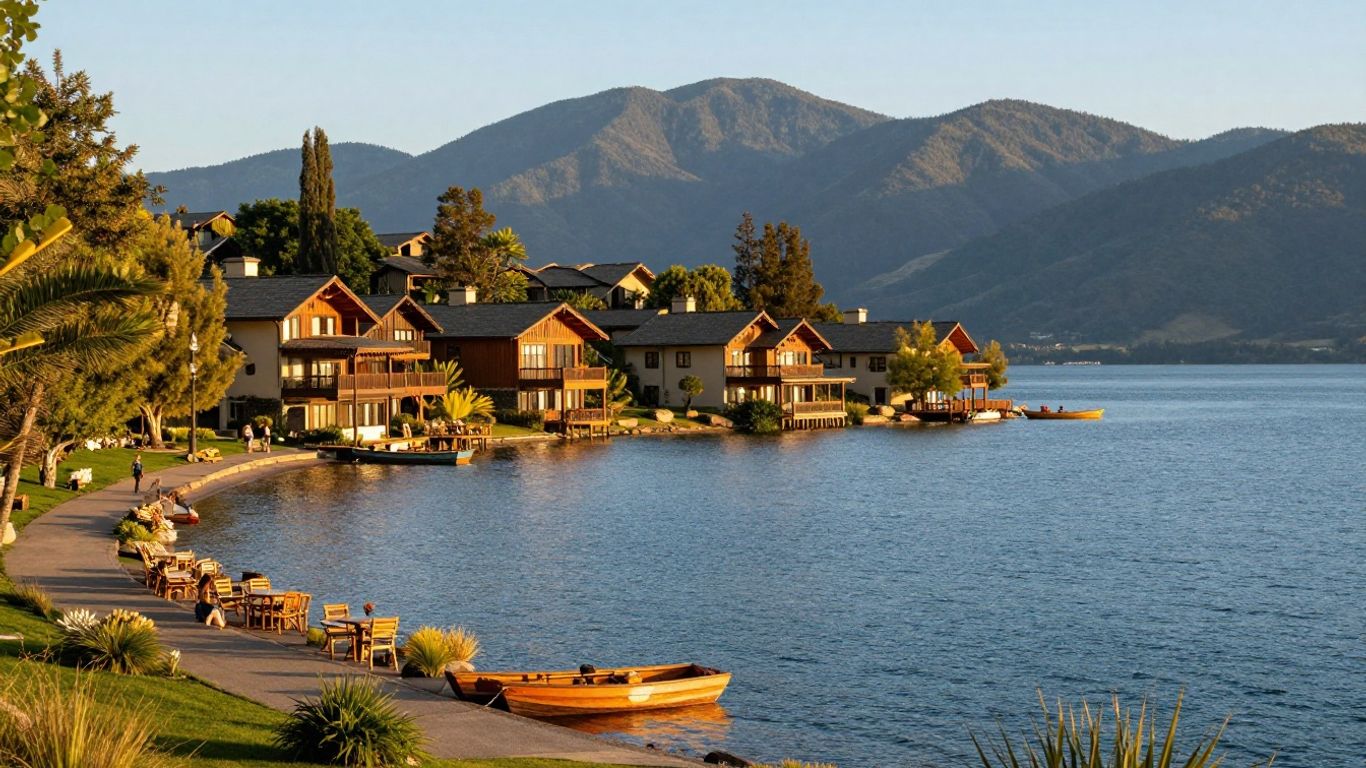
“Lakeside” can mean a room overlooking the water, a short walk to a shared beach, or a property near a marina with limited swimming access. Read the room and property descriptions carefully, and look for a map or recent photographs. A beautiful view does not always mean direct shoreline access.
Consider practical details too: Are there steps, a road, a steep path, or a long walk between the building and the lake? If you plan to carry fishing gear, towels, or children’s equipment, a few extra minutes can change how often you actually use the waterfront.
Matching the resort to your travel companions
Think about how different people will spend their downtime. A group of friends may appreciate connected rooms and late dining, while a multigenerational party may need elevators, quiet sleeping spaces, and activities that do not require strenuous travel. Couples often care more about privacy and atmosphere than the sheer size of the property.
Ask whether everyone can follow their own rhythm without making the stay awkward. Separate living areas, kitchen facilities, or several on-site dining choices can make a shared trip feel much easier.
Setting priorities for views, privacy, and convenience
Create a short ranking rather than treating every feature as essential. You might place a lake view first, a walkable town second, and a spa third, or reverse that order for a practical family weekend. Your real priorities matter most when two otherwise similar properties have very different prices.
It can help to divide preferences into “must have,” “nice to have,” and “not needed.” That simple exercise prevents a dramatic view from distracting you from a poor layout, inconvenient parking, or a location that adds hours to the journey.
Compare lakes resort hotel locations
Location shapes the entire character and cost of a lakes resort hotel. A property directly on the shoreline may make spontaneous swims and sunset walks easy, while one farther inland may offer better access to restaurants, towns, or major roads. Compare the setting in relation to the activities you actually plan to do, not just its distance from the lake.
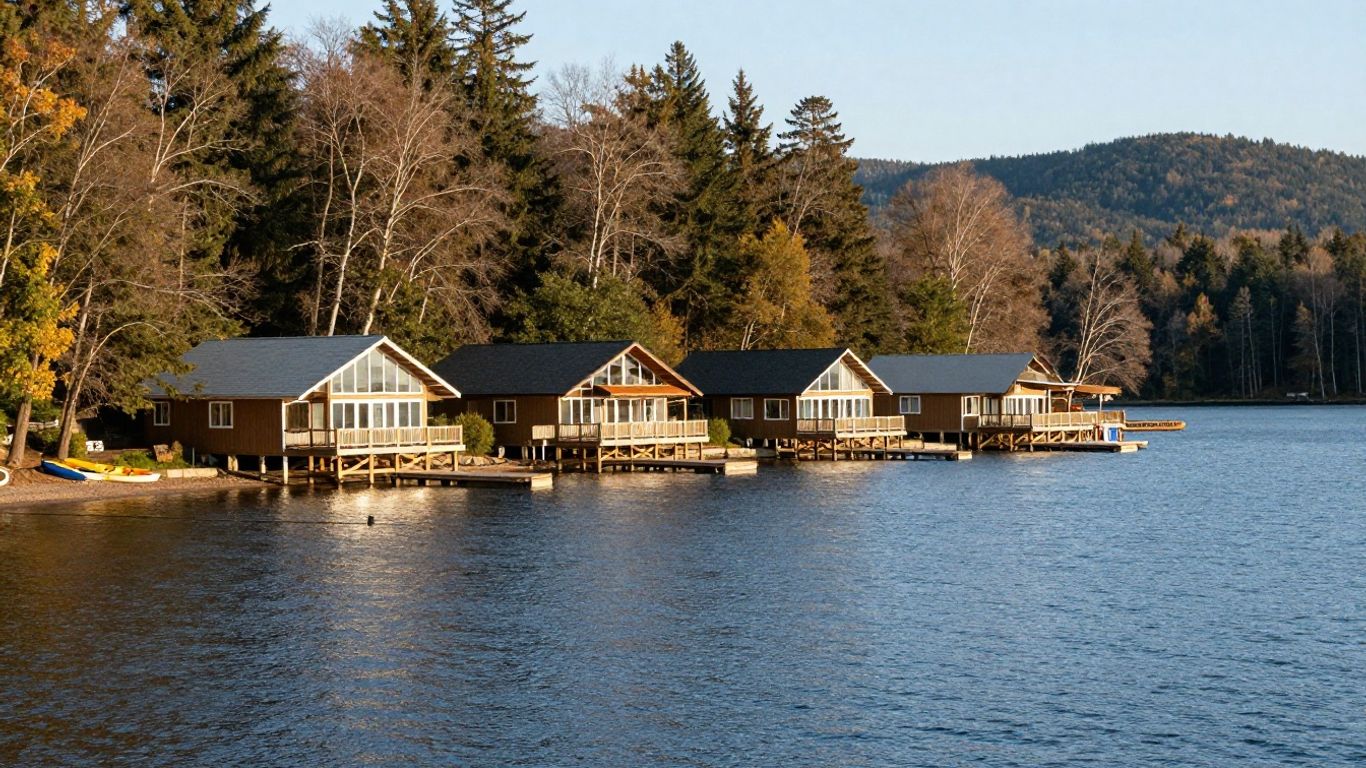
The best choice is often a compromise between scenery and practicality. Before booking, inspect the map, estimate driving times, and check whether seasonal conditions could affect roads, boat access, or local opening hours.
Evaluating shoreline access and waterfront views
Look beyond phrases such as “near the lake.” Confirm whether the resort has a private shore, a public beach nearby, a marina, or only distant views. Ask about swimming conditions, dock access, watercraft storage, and whether the best views are limited to selected room categories.
A waterfront position can also bring early-morning activity, boat noise, insects, or more exposure to weather. If quiet matters, find out which buildings face the water and which sit near pools, restaurants, parking areas, or event spaces.
Checking nearby attractions and seasonal activities
Map the experiences that will fill your days. A resort may be ideal for boating but less convenient for hiking, golf, museums, village restaurants, or family attractions. Seasonal availability matters as well: a summer marina schedule may not tell you much about a winter visit.
For broader trip planning, seasonal travel ideas can help you think about how weather and timing change the feel of a getaway. Use that inspiration as a starting point, then verify local conditions directly with the property or tourism office.
Considering airport access, parking, and local transportation
A remote location can be wonderfully peaceful, but only if the travel logistics suit your group. Check the nearest airport, transfer options, parking charges, charging availability, and whether a rental car is genuinely necessary. If you are traveling with young children or bulky outdoor equipment, a complicated transfer may outweigh a lower room rate.
Also ask about the final stretch of the drive. Mountain roads, limited fuel stations, and weak phone service can affect arrival plans, particularly outside peak season.
Understanding how location affects rates and availability
Prime waterfront rooms usually have fewer units and stronger demand, especially on weekends and during school holidays. A nearby property with a shorter water view may offer better value, but compare what you give up in walking time, dining convenience, and transport costs.
Availability can disappear quickly for particular layouts, not just entire properties. If your dates are fixed, search early; if they are flexible, compare weekdays, shoulder seasons, and alternate room categories before assuming the highest quoted rate is unavoidable.
Assess rooms, suites, and resort amenities
A resort’s facilities only improve a trip when they work for the way you will use them. Study the room dimensions, sleeping arrangements, storage, bathrooms, and outdoor space instead of relying on photographs alone. Then consider which amenities are included, which require reservations, and which are simply available somewhere on the property.
Comparing room types, layouts, and lake views
A standard room may be perfectly comfortable for two people who spend most of the day outdoors, while a suite can be worthwhile for families or longer stays. Look for separate sleeping and living areas, a kitchenette, a balcony, sofa-bed measurements, and enough storage for wet clothing or sports equipment.
The distinction between partial and direct lake views also deserves attention. Lake Powell Resort is a useful example of how room choices can differ: its listed accommodations include standard rooms as well as suites with separate living areas, wet bars, and private balconies with views.
Looking for pools, spas, fitness centers, and recreation
Amenities should solve a likely need, not merely decorate the booking page. A pool is valuable on a hot afternoon or when lake conditions are poor; a fitness room matters more for a longer stay than a one-night stop. Check opening hours, age restrictions, reservation requirements, and whether facilities are indoors or seasonal.
For an active trip, look for equipment storage, rentals, changing areas, and reliable information about operating conditions. Those small details often matter more than a long list of activities.
Reviewing dining options and on-site services
On-site dining can be a genuine convenience when the resort is remote or when your group has different schedules. Check breakfast hours, children’s choices, dietary accommodations, takeaway options, and whether reservations are needed. A bar or restaurant may be appealing, but it should not be assumed to operate every day or late into the evening.
A property centered on food and entertainment may suit one kind of trip particularly well. The Lakes Resort describes dining at Knots Kitchen, including Japanese and Peruvian flavors, carvery, wok options, and daily specials, making it relevant for travelers who want meals close to their accommodation.
Checking accessibility features and family-friendly facilities
Ask specific questions rather than relying on a general accessibility label. Confirm step-free routes, elevator access, bathroom design, parking distance, pool access, and whether accessible rooms have the layout your group needs. Families should also check cribs, high chairs, laundry, quiet hours, and safe paths to the water.
If needs are important to the trip, request written confirmation before paying a deposit. Availability of a feature is not the same as availability for your dates.
Plan activities for every season
A lake changes character through the year, and the resort should still make sense outside the postcard season. Summer may revolve around water, while spring and fall can favor walking, scenic drives, and lighter crowds. Winter visitors may value indoor comfort, nearby snow activities, or simply a quiet room with a view.
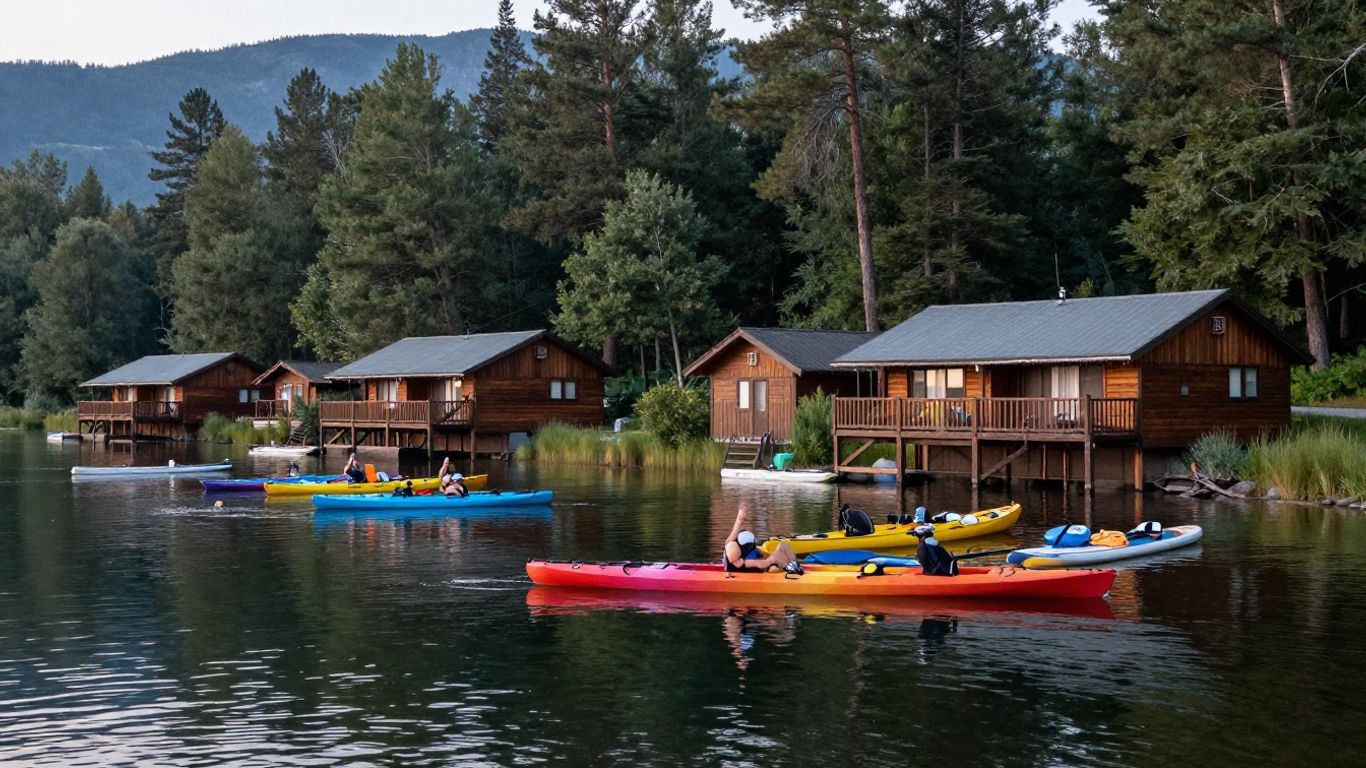
Build a flexible plan with a few weather-proof alternatives. That way, a windy afternoon or an unexpected closure does not turn into a day spent searching for ideas from the lobby.
Water sports, swimming, boating, and fishing
Confirm exactly what is available on-site and what is operated by an outside provider. Ask about boat rentals, paddleboards, life jackets, fishing permits, launch points, swimming zones, and advance reservations. Water access can be simple for experienced visitors but less so for beginners or families with small children.
Bring realistic expectations about weather and safety rules. A lake may be beautiful without being suitable for casual swimming, and equipment availability can be limited during busy periods.
Hiking, cycling, golf, and outdoor exploration
Trails and roads vary widely in difficulty, shade, surface, and distance from the resort. Ask whether bicycles are available, whether routes are suitable for children, and how far you must travel to reach trailheads or golf facilities. Pack for changing conditions rather than assuming the forecast will stay steady.
For a property combining several outdoor options, Lakehouse Resort describes golf, boating through the Lakehouse Sail Club, paddleboarding, and pool time at Lake San Marcos. Those listed activities illustrate why checking the exact mix matters more than simply seeing “recreation” in a description.
Winter activities and off-season experiences
Off-season travel can bring lower rates and a quieter atmosphere, but some facilities may close or reduce their hours. Check road conditions, heating, snow equipment, indoor spaces, and the availability of restaurants and shops nearby. If you prefer solitude, fewer events may be a benefit rather than a drawback.
Winter also rewards slower planning. Scenic drives, reading, photography, local food, and walks during clear spells can make a satisfying trip even when the water is not the main attraction.
Rainy-day options and indoor resort entertainment
A rainy-day plan should be more specific than “relax indoors.” Look for a heated pool, spa, games room, fitness area, lounge, children’s activities, or nearby museums and cafés. Check whether these options are included in the rate and whether they require advance booking.
Save the video for pre-trip planning, but verify current hours and policies with the resort. Online content can help you picture the setting; it should not replace a current answer about what will be open during your stay.
Review pricing, packages, and booking policies
The nightly price is only the beginning of the calculation. A lakeside stay may involve resort fees, parking, meals, equipment, taxes, pet charges, and transport. Compare the total cost for your actual group and dates, then decide whether the convenience of a package is worth paying for.
Calculating the full cost beyond the nightly rate
Build a simple trip total before comparing properties. Include the room, taxes, parking, fuel or transfers, meals, activities, and any charges for extra guests or equipment. A lower room rate can quickly lose its advantage if the property is far from everything or requires paid activities for the experience you want.
It is also worth checking the payment currency and any card-related conditions for international bookings. Keep a record of the quoted total so you can identify changes before confirmation.
Comparing meal plans, activity packages, and resort fees
Packages are useful when they include services you already intended to buy. They are less attractive when they bundle activities you will not use or impose fixed dining times. Read what is included, what must be reserved, and whether unused portions are refundable.
For an accommodation focused on golf, boating, and dining, Lakehouse Resort would already have been a natural comparison, but that page has been linked above; here, use the same method for any property by pricing each included benefit separately. The goal is a fair comparison, not the largest-looking package.
Understanding cancellation, deposit, and check-in policies
Read the policy before choosing a nonrefundable rate. Note the deposit amount, cancellation deadline and time zone, modification rules, minimum-stay requirements, check-in age, and late-arrival process. If weather or transport disruption is a realistic concern, flexibility may be worth more than a small discount.
Keep confirmation emails and policy screenshots together. Terms can differ between room types, promotional rates, and third-party booking channels.
Finding the best time to book a lakeside stay
Peak summer weekends and holiday dates tend to create the most pressure on waterfront inventory. Shoulder-season weekdays may offer a calmer experience and more choice, while last-minute deals are only sensible when your dates and room preferences are flexible.
Track prices for a short period, but do not wait indefinitely for a dramatic drop. Once you find a refundable rate that fits the budget, securing it can be more valuable than chasing a theoretical bargain.
Evaluate reviews and choose with confidence
Reviews are most useful when treated as a pattern-finding tool rather than a popularity contest. Read recent comments across more than one platform, paying attention to the dates, room types, and season of each stay. A complaint about a crowded pool in July may be less relevant to a quiet November visit.
Identifying consistent themes in guest feedback
Look for repeated observations about cleanliness, noise, staff communication, food, beds, water access, and the accuracy of photographs. Several guests describing the same issue is more informative than one dramatic review. Sort by newest first, then compare both high and low ratings.
The language guests use can reveal fit. Words such as “lively,” “remote,” or “rustic” are not automatically positive or negative; they depend on what you want from the trip.
Separating meaningful complaints from isolated issues
A single broken appliance or delayed meal may be an ordinary exception. Repeated reports of maintenance problems, inaccurate charges, poor soundproofing, or inaccessible facilities deserve more weight. Consider whether management responds clearly and whether the issue appears resolved in later reviews.
You can apply the same evidence-based mindset to practical purchases, such as this guide to Kia replacement parts, where quality, warranties, returns, and customer feedback all help distinguish a dependable choice from a risky one. The topic differs, but the habit of checking specific evidence is transferable.
Verifying recent photos, amenities, and property updates
Compare official photographs with guest-uploaded images and check when both were taken. Look for signs of renovation, changed furniture, seasonal closures, construction, or landscape changes. If a pool, restaurant, dock, or shuttle is central to your decision, verify that it remains available for your dates.
Photos can also clarify the practical feel of a room: balcony privacy, walking distances, bathroom size, and the view from lower floors are often easier to judge visually than from marketing copy.
Contacting the resort before making a reservation
A short, specific message can settle the questions that websites leave vague. Ask about your intended room, water access, accessibility, seasonal facilities, parking, dining hours, and the total price. Save the reply, particularly if it confirms a feature that affects your booking.
For a property where water access is central, Lakehouse Sail Club is described as offering boat rentals and paddleboarding on Lake San Marcos; a traveler should still confirm availability and booking arrangements for the desired dates. Clear questions make it easier to choose with confidence.
Conclusion
Choosing a lakes resort hotel becomes much simpler when you begin with the experience you want and test each property against it. Compare the setting, room, amenities, seasonal options, full price, policies, and review patterns, then confirm the details that could change the trip. A little careful research leaves more room to enjoy the lake once you arrive.
Frequently Asked Questions
What should I look for in a lakes resort hotel?
Start with shoreline access, room fit, seasonal activities, dining, transport, total price, and recent reviews. Prioritize the features that directly support your travel plans.
Is a waterfront room always worth the extra cost?
Not necessarily. A view can be valuable, but compare it with privacy, room size, noise, balcony quality, and how much time you expect to spend in the room.
When is the best season for a lakeside getaway?
Summer suits swimming and boating, while spring and fall often offer milder weather and fewer crowds. Winter can work well for quiet stays and nearby cold-weather activities.
How far in advance should I book?
Book earlier for peak weekends, holidays, popular room categories, and fixed dates. Flexible travelers can often compare shoulder-season weekdays and different layouts.
What extra costs should I budget for?
Allow for taxes, resort or destination fees, parking, meals, equipment rentals, activities, transport, pet charges, and extra-person fees where applicable.
How can I tell whether reviews are reliable?
Look for recent, repeated themes from guests who stayed in similar rooms and seasons. Specific observations are generally more useful than vague praise or criticism.
Should I contact the resort before booking?
Yes, especially when accessibility, water access, seasonal amenities, room layout, or cancellation terms are important. Ask focused questions and keep the written response for reference.